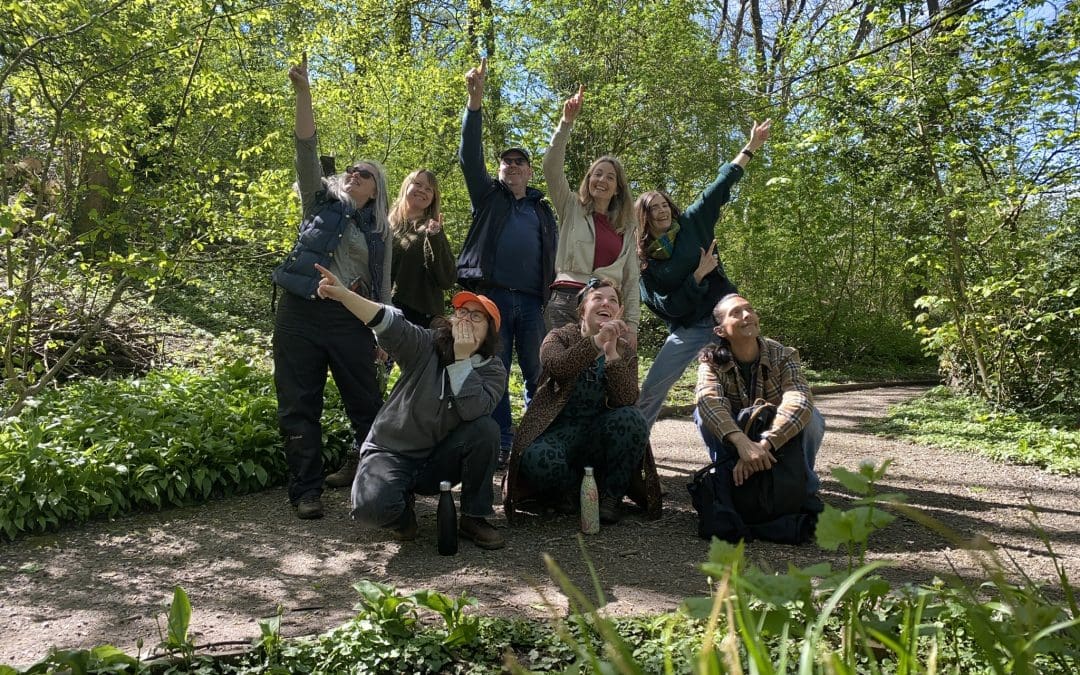


Last week with SVR, I attended a walk and talk centred on mosses, liverworts and lichens, headed by a pair of professional ecologists, Rupert and Dawn. Throughout the cold afternoon, we were enlightened to the incredible hidden diversity of lichens and bryophytes (‘lower plants’) in Midsomer Norton Town Park, a site which, apparently, hosts an unusually high species count even by British standards! Rupert had already visited the site a week earlier to perform a survey, and identified 12 liverworts, 59 mosses, and 39 lichens! A display of incredible ID skills if nothing else. Some of these species are locally rare and unusual to find in this region. A few others are foreign introductions including Heath Star Moss (Campylopus introflexus) which is native to Australasia.
We were first introduced to a nondescript hawthorn, that on closer inspection was hosting some thirty species of lichens and bryophytes on its trunk and branches. Many of us are so used to the sight of lichen-encrusted twigs and mossy trunks that we don’t even register it anymore, but if you pay attention, you’re looking at a fascinating living structure with diverse micro-habitats. These species are epiphytes – they are not parasitic to the tree, and lacking true roots, do not damage it in any meaningful way. Much like the microbiome of human skin, this is largely a commensal relationship, with the tree not much bothered one way or another. If the tree were to die, the epiphytes would soon die with it, as they would lose the structure they grow on, and may be consumed by the fungi and microbes that rot the dead wood.
Lichens are fungi, symbiotic with algae that allow them to draw energy from the sun and grow with carbon drawn from the air, as plants do. They are typically one of the first organisms to colonise any new bare ground, and different species can appear leafy, crusty, or even grow within rocks themselves, with only their tiny mushroom-like structures, known as apothecia, visible on the surface. These structures constantly release spores, which drift in their millions in the air, hoping to land on a compatible surface with compatible algal species to begin symbiosis. Without it, the spore dies, so any time you see a lichen that wasn’t produced asexually, it’s a lottery winner!
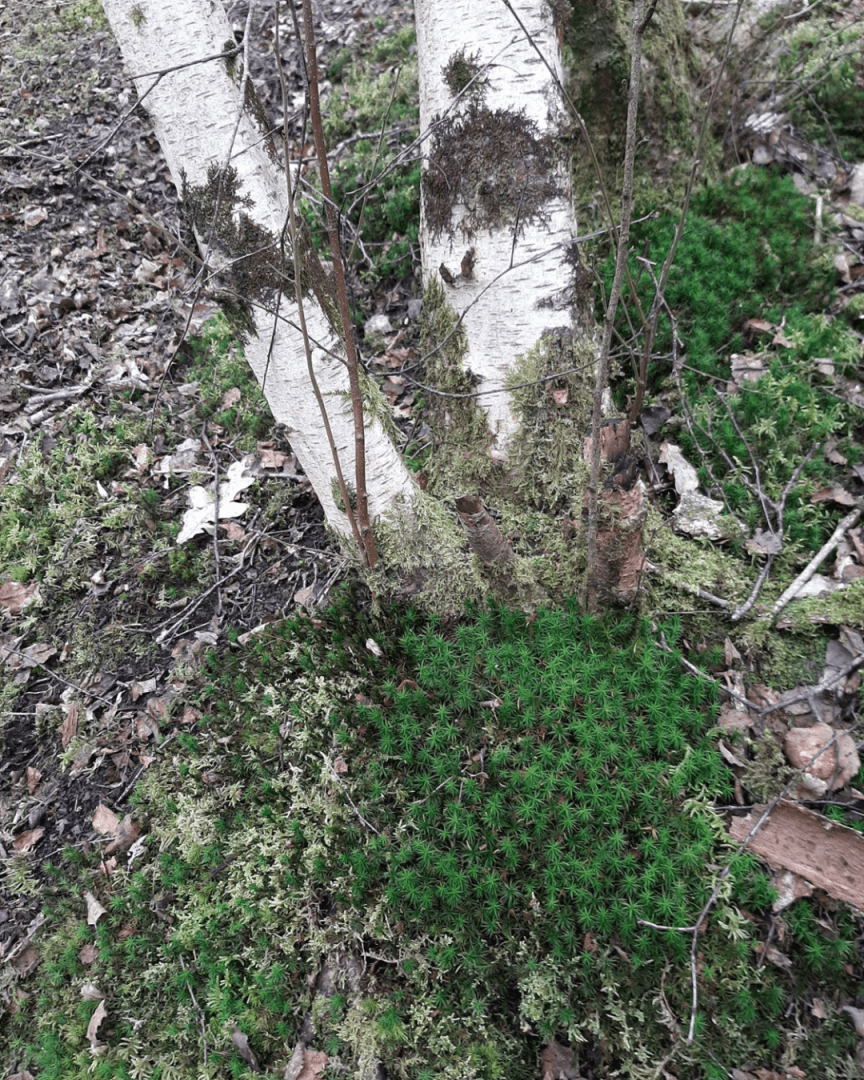
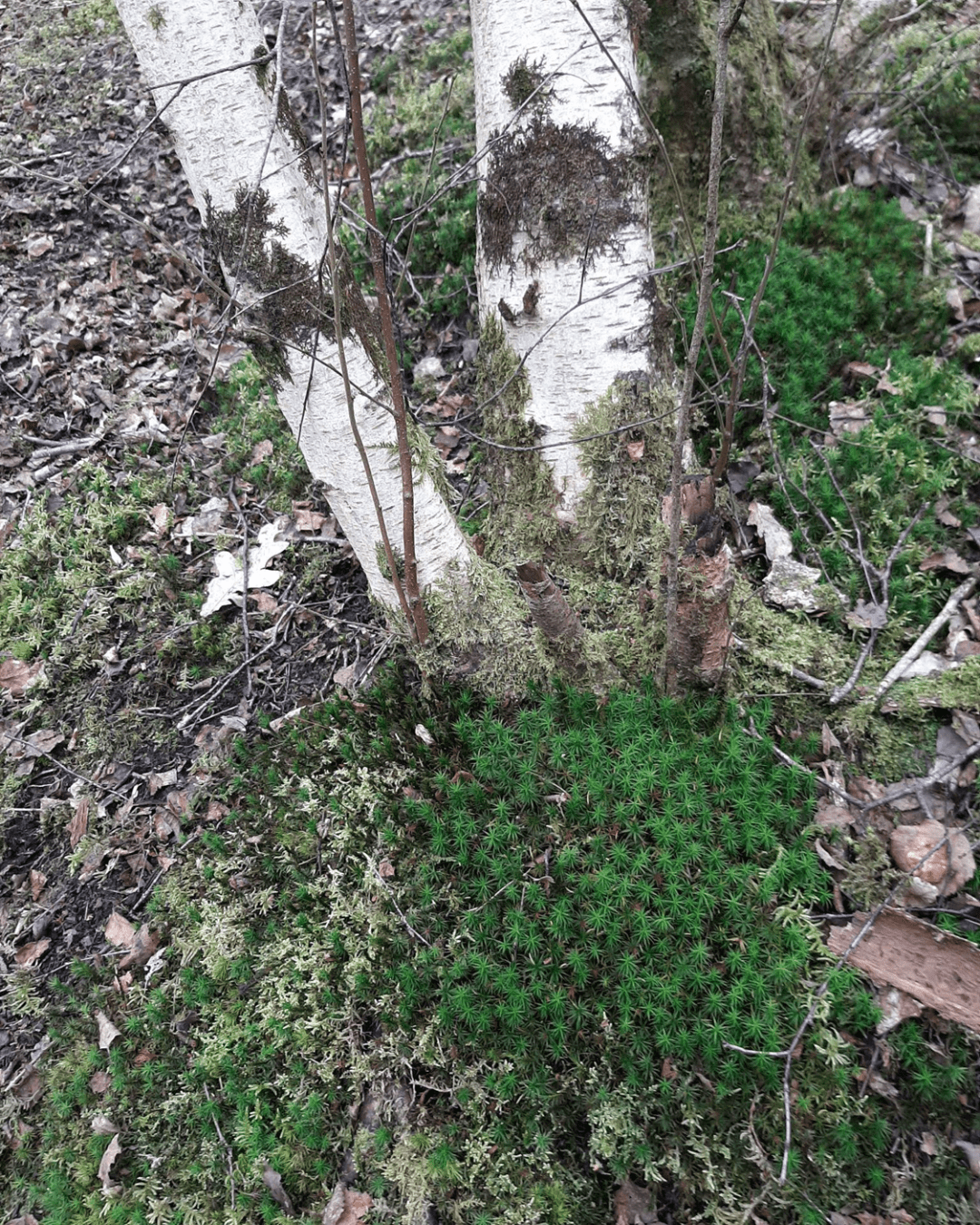
Liverworts and mosses, collectively called bryophytes, are true plants, distantly related to the ‘higher’ vascular plants with which they have coexisted since the Silurian Period. Without specialised tissues to transport water and nutrients throughout their bodies, they cannot grow big, so often escape notice. The wet climates of Britain and Ireland make them hotspots for European bryophytes, which particularly love our temperate rainforests. Still, they are everywhere if you pay attention. Virtually everyone’s roof has moss growing on it, and a wealth of species can be found growing in grasslands and woodlands, from the soil to the rocks, and the trunks and branches of trees. The slope going up the batch making up half of the town park is blanketed in moss! Experts at soaking up water, they must have a major impact on the hydrology of the area. Mosses may play a part in reducing flooding and soil erosion, and in boggier parts of the country, sequestering carbon dioxide from the atmosphere. Below is a photo I took from that hill, showcasing the trunk of a silver birch, covered in multiple species of mosses, and the purple crust of a liverwort known as Dilated Scalewort (Frullania dilatata). It’s only the tip of the iceberg!
Thinking on the experience, I’ve come to realise that bryophytes are like the insects of the plant kingdom. They are small and populous, but generally unpopular. Most people aren’t aware of their diversity or their ecological services, or indeed the marvels of evolution they display. They are routinely overlooked by the public, by conservationists and even plant experts, while vascular plants, much like vertebrate animals, get far more attention. They are everywhere, forming a layer of life on top of the trees and landscape. Few animals can eat them, but this is why they are favoured habitat for a wealth of tiny invertebrates, becoming micro-ecosystems all their own, with the food chain working up to feed larger animals like birds.
Next time you go on a walk, watch out for the creeping crusts, tufts and wisps of lichens and bryophytes, growing on the ground, on rocks and buildings, and on trees. You don’t need to be able to identify them but see how many distinct forms you can count on one branch, or stretch of wall. Some of them may literally be on your doorstep!
By Max Flagg, a Somer Valley Rediscovered Volunteer